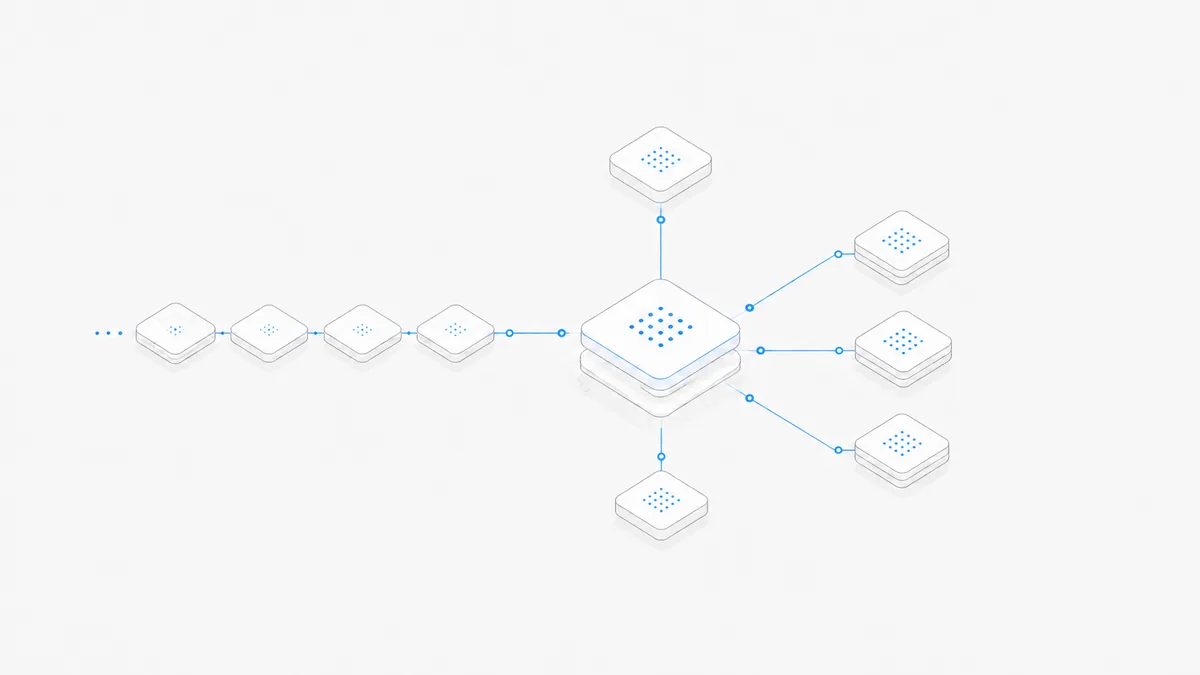
GPT-6 Astra does not have one price that applies everywhere. The amount you pay depends first on where you use it: directly through the OpenAI API, inside ChatGPT, or through Codex. Those routes may show the same model name while using different allowances, credits, rate cards, and long-context rules.
For the API, the current Standard rates are $10 per million input tokens, $1 per million cached input tokens, $12.50 per million cache-write tokens, and $50 per million output tokens. A request with more than 272,000 input tokens changes those rates. ChatGPT access is plan-based rather than a copy of that token invoice. Codex can use a ChatGPT plan and eligible credits, or it can use your own API key and follow API billing.
All prices and product rules below were checked against OpenAI's official pages on September 7, 2026. They can change, so verify the current rate card before making a production budget.
One model, three billing paths
Start by identifying the actual access path. This is more important than memorizing one headline number.
OpenAI's GPT-6 Astra access guide explicitly separates ChatGPT-plan access from API-key usage. That distinction prevents a common budgeting error: treating a ChatGPT subscription as prepaid API tokens, or assuming an API balance increases a ChatGPT or Codex allowance.
If you first need the release, context, and coding-agent overview rather than only the bill, read the GPT-6 Astra coding-agent guide.
GPT-6 Astra API prices
The official GPT-6 Astra model page lists these Standard API rates per one million tokens:
The cache columns are not interchangeable. A cache write costs more than ordinary uncached input because it creates the reusable entry. A later eligible cache read is much cheaper. You only realize the saving when stable prefixes are reused and cache hits actually occur; changing the prefix or cache conditions can turn the next request back into uncached input or a new write.
These token rates are also not necessarily the entire request cost. OpenAI may separately charge for certain tools. Rate limits, regional arrangements, and product-specific contracts can affect what is available. Use the model page and your account's usage record as the final source of truth.
How the 272K long-context multiplier works
Astra exposes a 1,050,000-token context window, but its API pricing changes when a request contains more than 272,000 input tokens. According to the model page:
- input and cache rates become 2× their normal rates;
- output becomes 1.5× its normal rate;
- the multiplier applies to the entire request, not only to the tokens above 272,000.
At Standard API rates, that means $20 per million uncached input tokens, $2 per million cached input tokens, $25 per million cache-write tokens, and $75 per million output tokens for a request in the higher tier.
This creates a cost cliff. A request with 271,000 input tokens and one with 273,000 input tokens are not priced by adding a small surcharge to the last 2,000 tokens. The second request moves the whole request into the higher-rate treatment. Before crossing that line, remove irrelevant files, improve retrieval, split independent work, or create an explicit handoff artifact. Do not delete evidence the task truly needs merely to stay under a billing threshold.
There is an important product-specific exception. OpenAI's enterprise token-based rate card says Astra usage in Codex does not receive the extra long-context multiplier and that Codex does not charge for cache writes under the eligible Work/Codex contract described there. That is not permission to apply the Codex exception to an API request or to every personal account. Follow the contract and usage page attached to the route you actually use.
Batch, Flex, and Fast do not share one multiplier
For Astra API usage, OpenAI currently lists:
- Batch: 50% of Standard API token rates;
- Flex: 50% of Standard API token rates;
- Fast: 2× the applicable API rates.
Batch and Flex can reduce token cost, but they are not automatic substitutes for an interactive coding session. Their availability and delivery characteristics must match the workload. A delayed offline evaluation may suit Batch. A person waiting inside a tool loop may value latency differently.
Fast also has a separate Work/Codex contract. OpenAI's Business and Enterprise credit rate card and enterprise token rate card describe Astra Fast in Work/Codex as 2.5× Standard, not the API's 2×. “Fast” therefore does not imply one universal multiplier across products.
When comparing service tiers, hold the task and acceptance checks steady. A cheaper tier that causes a timeout, retry, or manual handoff may increase the cost of the accepted result. A faster tier can be worth more than its token premium when it removes expensive waiting from an interactive workflow—but that is a workflow calculation, not a property of the model name.
ChatGPT and Codex are not the API rate card
ChatGPT access
ChatGPT presents Astra through eligible plans and workspaces as OpenAI's rollout expands. It does not turn every chat into an API invoice with the four per-token rows above. Availability can differ across Chat, Work, and Codex even for the same account, and the official access guide says rollout is gradual.
A subscription therefore answers two questions—eligibility and included usage—not “how many API dollars are included.” The model selector, plan page, workspace controls, and current usage surface are the relevant evidence. Purchasing credits does not move an account to the front of rollout.
Codex with ChatGPT sign-in
When Codex uses ChatGPT sign-in, eligible Astra work consumes the included Work/Codex allowance first. Some plans and regions can continue with purchased credits after the included allowance is exhausted. OpenAI's personal credits guide warns that those credits are separate from API credits and that availability varies by account, plan, and region.
For eligible Business and Enterprise credit-metered environments, OpenAI currently lists Astra at 250 credits per million input tokens, 25 per million cached input tokens, and 1,250 per million output tokens. That table is useful only for accounts governed by that rate card; do not apply it blindly to a personal account whose usage page presents a different contract.
Codex with an API key
If Codex is authenticated with your own OpenAI API key, the job is an API workload. It uses the API project, its permissions, its spend and rate limits, and the API token pricing. A ChatGPT subscription or Work/Codex credit balance does not pay that API bill.
For a broader explanation of plans and access paths, use the Codex pricing guide. The important rule here is simple: identify the authentication route before estimating Astra cost.
Two transparent API cost examples
The following examples are arithmetic illustrations, not typical-task promises. Real coding-agent runs can make multiple requests, use tools, retry, and generate more or fewer tokens.
Example 1: a reusable prompt below 272K input
Assume one Standard API request contains:
- 80,000 uncached input tokens;
- 20,000 cache-write tokens;
- 100,000 cached input tokens;
- 10,000 output tokens.
The estimated token cost is:
The four categories are non-overlapping in this hypothetical usage record. If the request does not actually produce a cache hit or write, replace those rows with the categories reported by the API.
Example 2: a request above 272K input
Assume a Standard API request contains 300,000 uncached input tokens, 20,000 cached input tokens, and 20,000 output tokens. Because total input exceeds 272,000, use the higher rates for the full request:
That estimate excludes tool charges and other requests made by an agent loop. A multi-step coding task should sum every request and retry. The coding-agent API cost method shows how to turn those records into a task-level estimate.
Choose by cost per accepted result
Per-token price is useful, but a coding agent is valuable only when its work passes the checks that matter. Compare routes using:
Use Astra when the additional capability or context changes the probability of a correct, accepted result enough to justify its total cost. Start a lower-cost route for bounded, reversible work with deterministic tests. Consider Astra for ambiguous multi-file work, long-horizon investigations, or tasks where a failed repair cycle is expensive. Keep permission boundaries and human review for high-consequence changes regardless of model strength.
A small controlled trial is better than a theoretical monthly estimate. Run the same representative task on candidate routes, record actual input, cache, output, retries, elapsed time, and reviewer corrections, then compare accepted artifacts. Repeat the trial when prices, model versions, or the agent harness changes.
FAQ
Is GPT-6 Astra $10 or $50 per million tokens?
Both numbers describe different API token categories at Standard rates: $10 for uncached input and $50 for output. Cached input and cache writes have separate prices, and long-context or service-tier multipliers can change the result.
Does a ChatGPT subscription include Astra API usage?
No. ChatGPT-plan access and API billing are separate. A plan can include eligible use in ChatGPT or Codex as rollout reaches the account, while an API-key request is billed to the API project.
Do purchased Codex credits unlock Astra early?
No. OpenAI's access guide says credits do not provide early access. The account or workspace must first receive the model through rollout.
Is Fast 2× or 2.5×?
It depends on the product contract. The Astra API lists Fast at 2× applicable API rates. OpenAI's eligible Work/Codex rate cards list Fast at 2.5× Standard. Check the route and rate card attached to the actual usage.
Does every Astra request above 272K cost more?
The API model page applies the higher rates to requests with more than 272,000 input tokens. The enterprise Work/Codex rate card documents a Codex exception for its eligible contract. Do not transfer that exception to direct API calls.
The best first step is to identify the Agent, model route, and billing path before committing to a long run. Open Agent.Space to inspect the current Agent and compatible-model choices; the live selector is the source of truth, and this article does not claim that Astra is currently available there.