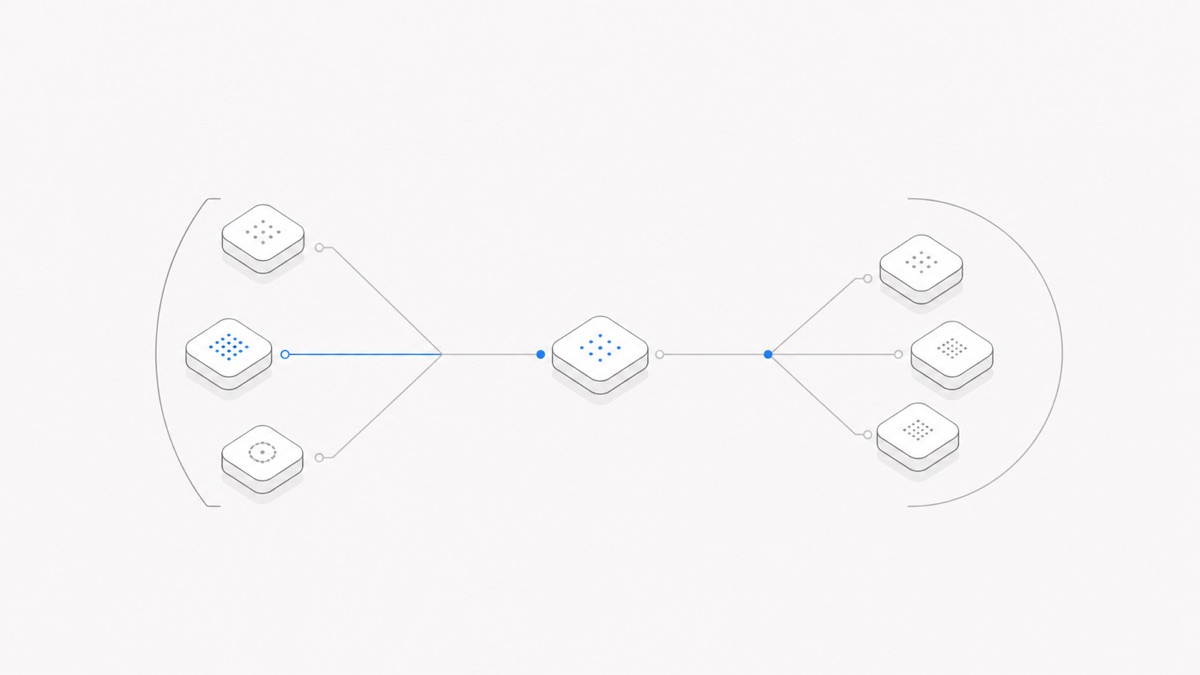
OpenRouter Auto Router is not automatically free. The openrouter/auto router does not add a separate routing fee, but you pay the standard rate of the model it selects. If you want a router that stays within currently available free models, the relevant slug is openrouter/free.
There is a third option: choose a specific model variant whose slug ends in :free. That gives you more model control than the Free Models Router, while retaining the availability and rate-limit constraints of free inference.
The names are similar, but the decisions are different:
OpenRouter is the model and provider-access layer in this comparison. It is not the Coding Agent harness that reads a repository, executes tools, and verifies changes. If those layers are easy to conflate, review the difference between a model and an agent harness.
What is OpenRouter Auto Router?
The official Auto Router documentation describes openrouter/auto as a model slug that automatically selects a model for the prompt. OpenRouter says the selection uses aggregate market activity over a trailing seven-day window for each task type, together with the router’s configured cost band and eligibility rules.
That means Auto Router is a model selector. It is useful when prompts vary enough that one fixed model may not be the right default for every request.
The response includes the model that was selected. Log that field. Without it, an application can observe a price or behavior change without knowing that the underlying model changed.
Auto Router also lets callers restrict eligible models with allowed_models and excluded_models. Those controls matter when a workflow has compliance requirements, a fixed evaluation set, or models that have not passed its acceptance tests.
How much does Auto Router cost?
OpenRouter’s current documentation says there is no additional fee for using Auto Router. The request is billed at the standard rate of the model that actually serves it.
“No additional router fee” is not the same as “free inference.” If the router selects a paid model, the request consumes credits according to that model’s current pricing. Because the selected model may differ by prompt, the cost can differ too.
The current Auto Router uses a cost_tier setting with five bands: low, medium, high, xhigh, and max. The documentation says low favors the cheapest capable models, while max favors the most capable models regardless of price. A request without a cost setting routes roughly as if it used the low band.
A band is not a hard maximum price. OpenRouter describes each tier as a market band; it can exclude models both below and above the band. If you need a strict budget ceiling, do not treat cost_tier as one. Enforce budget limits in the application and monitor the returned model and usage.
Older examples may use cost_quality_tradeoff. OpenRouter now marks that setting as deprecated. It remains accepted for backward compatibility, but cost_tier takes precedence when both are present. New implementations should follow the current documentation rather than copying an older snippet.
What is the Free Models Router?
The Free Models Router uses the slug openrouter/free. It selects from the free models available at the time of the request.
OpenRouter describes the selection as random among the available free pool after filtering for capabilities the request requires, such as image understanding, tool calling, or structured output. That qualification is important: the router does not blindly send every request to every free model, but the exact model can still vary.
You can call it through the API by setting:
The returned response identifies the model that handled the request. Keep that value in logs, especially when evaluating output quality or investigating a regression.
What is a :free model variant?
OpenRouter also supports a Free Variant for specific models. Appending :free to an eligible model slug asks for that free variant instead of allowing openrouter/free to choose from the pool.
This is the more controlled free option when you want to evaluate one known model repeatedly. It does not create paid capacity for that model. The free endpoint can still have different rate limits and availability from its paid counterpart.
Use the three options for different jobs:
openrouter/autowhen model selection can vary and you are prepared to pay the selected model’s rate.openrouter/freewhen zero model inference cost matters more than keeping one exact model.model-slug:freewhen you want a specific free model and can tolerate its free-endpoint constraints.
What are the current free-model limits?
Free-model rules are time-sensitive. When this article was checked on August 27, 2026, OpenRouter’s FAQ and Pricing page showed a base limit of 50 free-model API requests per day. The FAQ said accounts that had purchased at least $10 in credits received a limit of 1,000 free-model requests per day.
Those figures are a dated snapshot, not a permanent allowance. Recheck the current account and documentation before building around them.
OpenRouter’s Free Models Router guide also warns that free models can have different rate limits and availability from paid models. It positions them for experimentation, learning, and low-volume use, and points higher-reliability production workloads toward paid models.
The practical constraints include:
- the free pool can change;
- the model selected by
openrouter/freecan change between requests; - a required capability can shrink the eligible pool;
- a free endpoint can be rate-limited or temporarily unavailable;
- behavior, context, tokenizer, and tool reliability can change with the selected model.
“Free” describes model inference cost for an eligible free route. It does not guarantee capacity, a fixed model, an SLA, or a complete zero-cost application. Your own hosting, tools, search, storage, and human review can still incur costs.
Auto Router versus Free Router for coding tasks
Coding workflows amplify the difference because they often use several requests and tools per task.
Learning and prompt experiments
openrouter/free is a reasonable way to explore an API shape, test a small prompt, or learn how model responses differ when the result is not production-critical. Log the selected model so the experiment remains interpretable.
Repeated evaluation of one model
A specific :free variant provides a cleaner comparison than the Free Models Router because the model identity is fixed. Availability and rate limits can still interrupt the run, so do not treat it as a production-capacity test.
Mixed general-purpose prompts
openrouter/auto can be useful when task types vary and the application accepts model selection by the router. Restrict the eligible set to models that have passed your minimum tests, choose an appropriate cost tier, and track the model selected for every request.
Reproducible production agents
A fixed paid model—or a tightly controlled model list with explicit fallbacks—usually creates a clearer baseline for debugging, audits, and cost attribution. That does not make it universally better; it simply removes one source of variation. Production reliability still depends on provider routing, which is explained in how OpenRouter chooses a provider.
How to avoid surprise costs and behavior changes
Use a small set of controls before connecting any router to a multi-step coding loop:
- Log the selected model. Auto and Free Router responses identify which model served the request.
- Log usage and total task cost. Measure the complete Agent loop, including retries, not only one request.
- Restrict eligible models. Use Auto Router allowlists or exclusions when only evaluated models should run.
- Set an application budget. A cost tier guides selection; it is not a hard spending cap.
- Check required capabilities. Tools, structured output, input modalities, and context must match the workflow.
- Define fallback behavior. Decide whether a failed route should retry, change provider, change model, or stop for review.
- Run an acceptance test. Compare results using the same repository state, tools, and validation command.
If the first decision is which fixed models deserve testing, use the guide to compare OpenRouter coding models by live price before turning on automatic selection.
OpenRouter routers do not replace an Agent harness
Auto Router chooses a model. Free Models Router chooses a free model. Provider routing chooses an endpoint that can serve the selected model. None of those actions, by itself, performs the complete Coding Agent loop.
The harness remains responsible for repository access, tool execution, state, approvals, compaction, retries, and verification. A router can be one input into that system. It should not be credited with capabilities that belong to the harness, or blamed for failures caused by an unrelated tool or environment.
Keeping the layers separate also improves measurement: record the model, provider, harness version, tool errors, task result, and cost. Otherwise, a change in any one layer can look like unexplained model drift.
Frequently asked questions
Is openrouter/auto free to call?
The router has no separate usage fee, but the model it selects can be paid. The request is billed at the selected model’s standard rate.
Which OpenRouter router only uses free models?
openrouter/free selects from currently available free models. A specific eligible model can also be requested with a :free variant.
Does Free Models Router always return the same model?
No. OpenRouter says it selects from the currently available free pool after filtering for capabilities required by the request. Log the returned model if consistency matters.
Can I use OpenRouter free models in production?
The official guide describes them as suitable for experimentation, learning, and low-volume use, and warns that rate limits and availability differ from paid models. A production decision should be based on your required capacity, reliability, and acceptance tests.
Is Auto Router always the cheapest option?
No. Its current cost tiers influence the market band, but the router is designed to balance model selection for a task. It can select a paid model, and a low tier is not a hard price ceiling.
Conclusion
OpenRouter Auto Router is not a free-model router. Use openrouter/auto when automatic model selection is valuable and you accept the selected model’s price. Use openrouter/free for low-volume, zero-model-fee experimentation, or a specific :free variant when model identity matters more.
Before attaching any option to a Coding Agent loop, log the selected model, enforce a budget, restrict the eligible set, and run one reproducible acceptance task. That turns “free or auto?” from a naming question into a measurable operational choice.