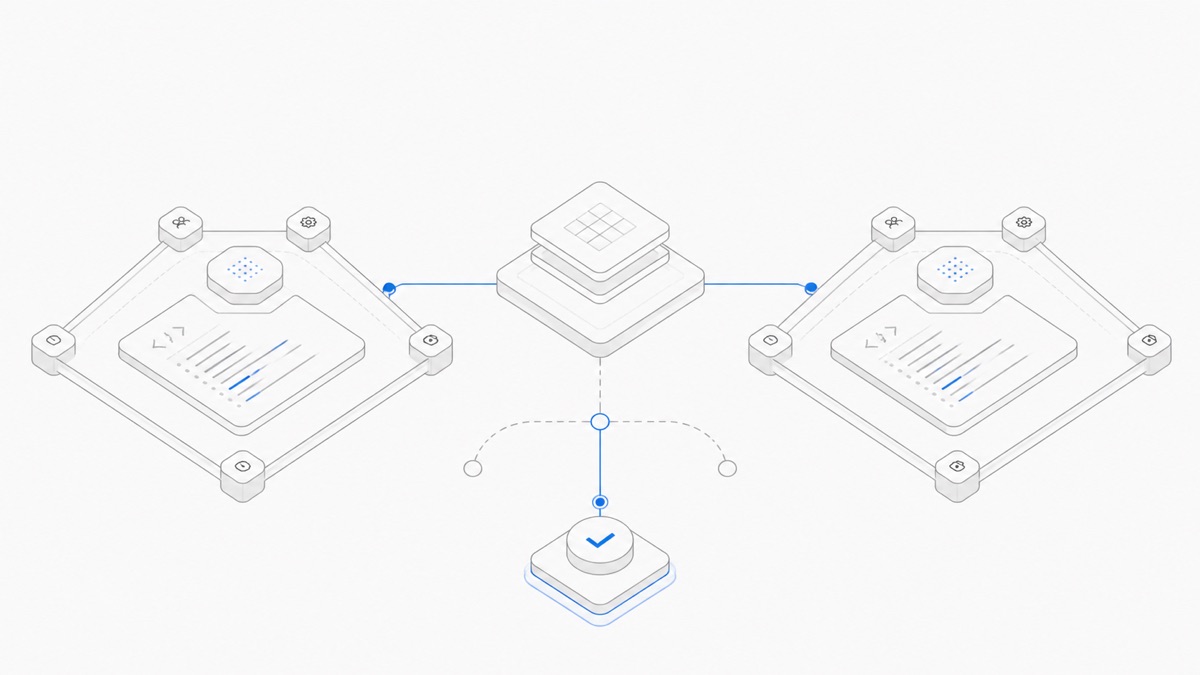
Choose OpenAI Codex when you want OpenAI's coding agent across its native CLI, IDE, app, and cloud surfaces, paid through an eligible ChatGPT plan or a separate API route. Choose Devin when you want Cognition's session-centered product system, including local Terminal and Desktop work, managed cloud sessions, parallel delegation, review, integrations, and a quota-plus-credit team model.
That is a starting rule, not a quality verdict. Both products now have local and vendor-hosted cloud paths, so the old shorthand “Codex is a terminal tool; Devin is a cloud agent” is no longer a useful comparison.
This article is a source-based analysis of OpenAI and Cognition documentation checked on September 4, 2026. It is not an Agent.Space same-task benchmark. It does not claim that one product writes better code, works faster, or costs less per accepted result.
Codex vs Devin: the short decision
Start with the workflow you need to own.
Existing procurement can make one route easier to adopt, but it is not proof of technical superiority. Product surface, permissions, repository integration, task shape, and review cost still matter.
Compare two product systems, not “local versus cloud”
OpenAI and Cognition now both span more than one interface. Compare the whole loop rather than selecting one screenshot or command line from each brand.
The Agent.Space Codex page describes the current Agent.Space boundary for Codex. It does not make Devin another Agent.Space execution option, and this comparison does not assume that it does.
Where the work runs—and how it moves
The clearest difference is not whether cloud execution exists. It is how each product defines the transition between an active local loop and delegated work.
OpenAI's Codex cloud documentation says each cloud task receives an isolated environment. You connect GitHub or GitLab, configure dependencies, tools, variables, and required secrets for the repository, then let the task run in the background. Work can start from the web, GitHub, GitLab, Linear, or Slack. When it reaches a reviewable result, Codex presents a summary and diff for follow-up or a pull request.
The CLI and IDE extension serve a closer local loop. They operate beside the selected checkout and its tools, subject to the route's sandbox and permission settings. A local task and a cloud task should not be treated as one magically shared machine: record the branch or commit, environment configuration, available secrets, network policy, and uncommitted changes at every handoff.
For a more detailed OpenAI-only comparison, Codex Cloud vs Codex CLI explains those state and permission boundaries.
Cognition's current Devin workflow guidance includes both local coding and managed cloud work. Devin for Terminal uses local files and environment for an interactive loop. Its documented /handoff command packages the conversation context and current Git branch, then creates a cloud Devin session that can continue in the terminal or web app.
Devin Desktop, the current name for Windsurf, adds an IDE and a command center for local and cloud agents. A separate cloud Devin session has its own configured environment and tools. The handoff reduces manual restatement, but it does not remove the need to check the resulting branch, permissions, dependencies, secrets, and test state.
This gives Devin a specifically documented local-to-cloud transition. Codex gives you several native surfaces and a cloud environment model. Which is better depends on whether you value an explicit handoff from an active terminal session or prefer to create a bounded cloud task against a configured repository state.
Delegation, review, and integrations
Both products support asynchronous work, but they organize it differently.
Codex cloud treats each delegated task as work in a dedicated environment. OpenAI documents parallel attempts, background execution, integration-triggered tasks, reviewable summaries and diffs, follow-up instructions, and pull-request creation. This works well when a team can define a result, prepare the environment, and review each returned change independently.
Devin's official guidance is organized around sessions and managed Devins. Cognition documents these patterns:
- scope work before implementation, then split independent tasks across parallel sessions;
- launch sessions from the product, Slack, Teams, ticketing integrations, or an API;
- return to draft pull requests waiting for review;
- use the embedded shell, IDE, and browser to inspect or take over work;
- schedule recurring sessions and use playbooks or organizational knowledge where the plan supports them;
- use Devin Review and related workflows to respond to comments and CI failures under the configured billing and control rules.
These are product capabilities, not evidence that a delegated task will succeed without supervision. In both systems, write explicit acceptance criteria, protect the main branch, limit repository and secret access, and require the same tests and review you would require from another contributor.
The integration list should not decide the purchase by itself. Ask which system is authoritative in your team: the local checkout, GitHub or GitLab, the ticket tracker, Slack or Teams, a scheduled automation, or the agent vendor's own session queue. Choose the product whose handoff and audit trail fit that system.
Pricing and billing are different contracts
The plans have similar headline numbers at some levels, but their allowances and product surfaces differ.
These facts come from the current OpenAI Codex pricing page and Devin self-serve billing documentation. They are a September 4, 2026 snapshot, not permanent terms. Prices, taxes, regions, models, limits, credit rules, and contract conditions can change.
One stale comparison is especially important to remove. Cognition's April 14, 2026 self-serve update replaced the old $500-per-month Team entry with Free, Pro, Max, and an $80-minimum Teams plan. It also moved extra self-serve usage to dollar-denominated billing; Enterprise agreements can continue to use ACUs. An old $500/month or universal $2.25/ACU figure is not a current self-serve answer.
For the OpenAI side, use the detailed Codex pricing routes before choosing between a ChatGPT identity, purchased credits, an API project, and an organization plan. Those balances are not interchangeable merely because they can all fund Codex-related work.
Do not compare these plans by inventing a task conversion. A Codex allowance, a Devin quota, and a dollar of on-demand credits are not published as equivalent units. Measure your own accepted-result cost if economics will decide the purchase.
Which workflow fits you?
“Start with” does not mean “standardize forever.” A team can use one product for closely steered local work and another for a specific remote workflow. The extra product is justified only if it removes a real handoff, capability, governance, or capacity constraint.
Run a controlled comparison before standardizing
Feature tables cannot answer which product is better for your repository. Use a small task set and preserve the evidence.
- Choose the same starting commit. Use isolated branches or worktrees so one run cannot contaminate the other.
- Write one observable result. Define scope, protected files, tests, output format, and stopping conditions before either run starts.
- Record the exact route. Product surface, client version, model, reasoning setting, plan or API identity, and environment all matter.
- Align permissions. Give comparable repository, shell, network, and secret access where the products allow it; document unavoidable differences.
- Count the whole loop. Include planning, model and credit use, tool failures, retries, CI repairs, elapsed time, and reviewer corrections.
- Judge the artifact. Compare the final diff, test evidence, scope discipline, security boundary, and ease of taking over—not the fluency of the chat.
- Repeat across task shapes. Include one mechanical change, one normal multi-file task, and one uncertain investigation before choosing a default.
If the products use different models or cannot expose equivalent tools, say so in the result. That makes the test a comparison of complete product routes, which is still useful. It simply does not isolate “agent intelligence” as one variable.
What this means for Agent.Space
Agent.Space currently presents Codex as a supported Agent harness with model selection handled separately. This page does not claim that Devin is available in Agent.Space, that a Devin subscription can be used there, or that Agent.Space has tested Codex against Devin.
If you choose Devin, follow Cognition's current product, billing, and security documentation. If you choose Codex and want to evaluate the Agent.Space route, check the current Codex product page and live selector first. Product availability can change, and a supported harness still needs a compatible model and a task-specific permission boundary.
The takeaway
Codex vs Devin is no longer a simple local-versus-cloud decision. Codex combines OpenAI-native CLI, IDE, app, and isolated cloud tasks with ChatGPT-plan, credit, organization, or API billing paths. Devin combines Terminal, Desktop, managed cloud sessions, an explicit terminal-to-cloud handoff, parallel session workflows, review, integrations, and quota-plus-credit billing.
Choose by the transition your team needs: where work starts, what state moves, how parallel tasks are supervised, where review happens, and who owns the bill. Use current official pricing to form the shortlist, then run the same bounded work through both products when result quality is the deciding factor.
If Codex is the route you choose, start a bounded Agent.Space task with explicit acceptance checks. That CTA is for the supported Codex path; it is not a Devin integration claim.
FAQ
Is Devin more autonomous than Codex?
The products expose different delegation systems, but “more autonomous” is not a stable measurable fact without a task, permissions, model, stopping rule, and acceptance check. Both support background or cloud work and parallel tasks. Compare intervention rate and accepted results on your workload rather than relying on the label.
Is Codex cheaper than Devin?
Codex currently has lower individual entry points at Free, $8 Go, and $20 Plus, while Devin lists Free and $20 Pro. Both also have higher tiers and different overage systems. The cheaper accepted result depends on task success, repairs, limits, and the product surfaces you need; the monthly price alone cannot answer it.
Do both Codex and Devin support local and cloud work?
Yes, according to the current official product documentation. Codex has CLI and IDE routes plus isolated Codex cloud tasks. Devin has Terminal and Desktop routes plus cloud sessions; Cognition documents /handoff for moving terminal context and the current Git branch into a cloud session.
Which is better for a software team?
Codex is a natural first evaluation for an OpenAI- or ChatGPT-managed organization. Devin is a natural first evaluation for a team that wants its session, full/flex seat, shared-credit, managed parallel-worker, and collaboration-integration model. Teams that care most about result quality should test both under comparable controls.
Can I run Devin in Agent.Space?
This article does not establish a Devin integration and does not claim that Devin is an Agent.Space option. Use Agent.Space's current Agent list for supported harnesses and Cognition's official product for Devin availability. The Agent.Space CTA on this page applies only if you choose a currently supported Codex route.