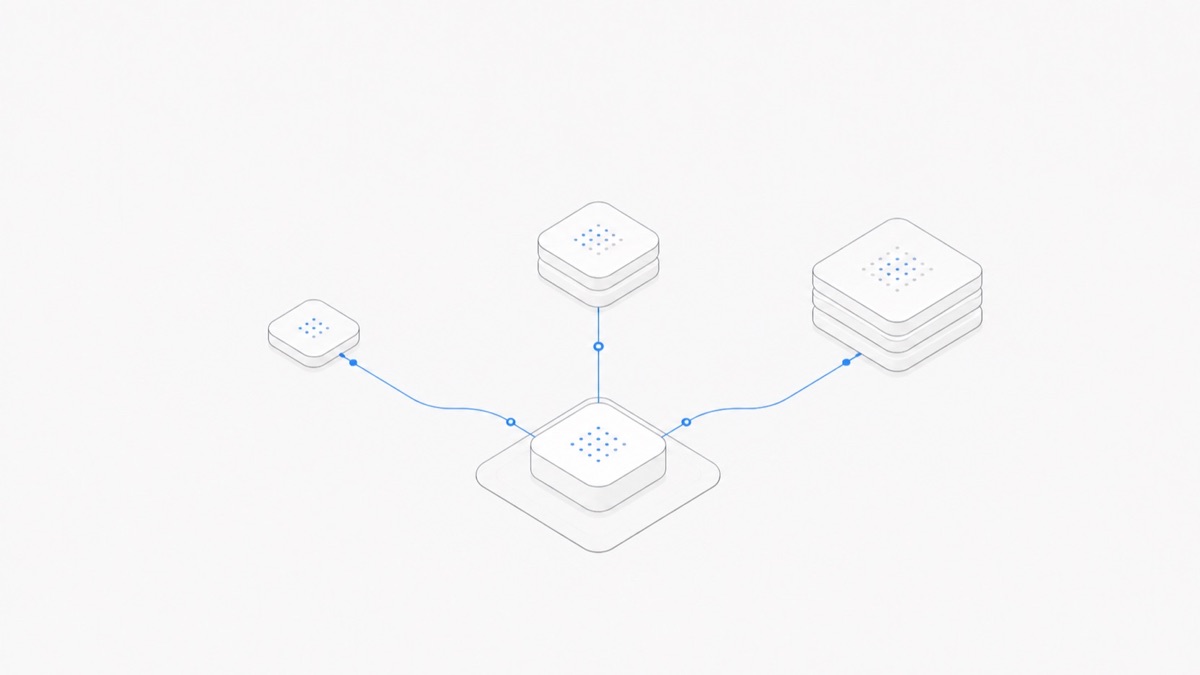
Choose GPT-5.6 Sol for difficult, open-ended work; Terra for everyday development that needs a balance of capability and cost; and Luna for clear, repeatable, high-volume tasks. That is the practical starting point in OpenAI's current Codex model guidance.
It is not a permanent ranking. The best Codex model depends on the task, the selected reasoning effort, how many agent turns the work requires, and whether usage is billed through ChatGPT or an API account. A narrow transformation can favor speed and low cost. An ambiguous migration may justify a slower, more capable run if it avoids failed edits and review cycles.
This guide compares GPT-5.6 Sol vs Terra vs Luna, explains the completed August 31 GPT-5.4 migration, and gives you a small test plan before changing a real workflow. If you are still separating the product layers, read the difference between an agent harness and a model first.
Last verified: 2026-09-07. Model availability, aliases, prices, reasoning controls, and Codex surfaces can change. OpenAI's current model pages still list Sol, Terra, and Luna alongside GPT-6 Astra; Astra has not been documented as a wholesale replacement for the GPT-5.6 family.
GPT-5.6 Sol vs Terra vs Luna at a glance
OpenAI describes all three as members of the GPT-5.6 family, but gives them different jobs.
*API prices shown are the rates on each official model page when checked on September 7, 2026. They apply to usage billed through the API, not a direct conversion of ChatGPT plan allowance or Codex Credits. OpenAI labels Sol's current rate as promotional through at least November 21, 2026. All three pages list a 1.05-million-token context window and a 128,000-token maximum output, but capacity alone does not show how well a model will use a particular repository.
The table should narrow your first test, not settle the final decision. A Luna task that needs several corrections may cost more operationally than a Terra task that passes once. A Sol run can also be wasteful when the answer is deterministic and easy to verify.
Choose GPT-5.6 Sol for the hardest, least-defined work
OpenAI positions GPT-5.6 Sol as the flagship tier for complex professional work. In the Codex guide, the examples include difficult code changes, deep research, computer use, and work that needs more judgment or polish.
Sol is the strongest starting candidate when the task has several of these characteristics:
- the correct solution is not obvious at the beginning;
- the agent must investigate across multiple systems or parts of a repository;
- a wrong architectural choice would be expensive to reverse;
- the final result needs careful reasoning, review, or presentation;
- you can state the outcome, but prescribing every step would be counterproductive.
Sol is not automatically the right model for every “large” task. A repository-wide rename can touch many files yet remain mechanically simple. Conversely, a five-line authorization change may be small in diff size but high in risk. Choose based on ambiguity and consequence, not file count.
Higher reasoning effort can improve a difficult run, but it also takes longer and uses more tokens. Start at the default effort with an explicit acceptance test. Increase effort only when the same model fails because the task genuinely needs deeper planning—not because a missing tool or permission prevented execution.
Choose GPT-5.6 Terra for everyday Codex work
GPT-5.6 Terra is OpenAI's balance tier. The current Codex guidance calls it a pragmatic everyday workhorse: strong enough for reasoning and tool use when Sol's extra depth is unnecessary.
Terra is a sensible default test for work such as:
- implementing a well-scoped feature with clear acceptance criteria;
- debugging a reproducible failure;
- reviewing a pull request against repository rules;
- updating tests and documentation with the code change;
- running a multi-step workflow whose tools and success conditions are known.
The important word is default, not winner. Terra gives you a middle point from which to move in either direction. If it solves the task reliably, Sol may add cost and delay without changing the accepted result. If Terra repeatedly misses architectural implications despite having the right evidence and tools, Sol is the next controlled variable to test.
For teams, this middle tier can also simplify routing. Start normal work on Terra, document the conditions that justify Sol, and reserve Luna for tasks with a narrow, repeatable contract. That policy is easier to review than allowing every task to select the most expensive or fastest option by intuition.
Choose GPT-5.6 Luna for clear, repeatable work
GPT-5.6 Luna is the lowest-priced GPT-5.6 API tier and is positioned for cost-sensitive, high-volume workloads. OpenAI's Codex guidance points to extraction, classification, transformation, and structured summaries as representative tasks.
For coding workflows, the equivalent is work with a tight contract and a cheap verification step:
- convert files to a known format;
- classify issues or test failures into a fixed taxonomy;
- make a repetitive change with a reliable test or linter;
- summarize a bounded diff into a required schema;
- generate routine artifacts from an approved template.
Luna becomes a poor fit when “repeatable” is mistaken for “safe without review.” A low API price does not make a high-risk migration low risk. It also does not compensate for a vague prompt, missing context, or an agent loop that retries indefinitely.
The strongest Luna workflow has four properties: a narrow input, a clear output contract, a limited tool set, and an automated acceptance check. If one of those is missing, fix the workflow before concluding that the model is inadequate.
API model prices are not ChatGPT Codex usage rates
The numbers in the comparison table come from OpenAI's API model pages. They matter when Codex is authenticated with an API key and the API organization owns the bill.
They do not tell you exactly how much ChatGPT plan allowance or purchased Codex Credits a task will consume. OpenAI can apply product-specific usage rules, and a coding task can involve multiple turns, tools, context reads, and retries.
Keep these two paths separate:
- ChatGPT sign-in: usage follows the current ChatGPT plan, workspace rules, eligible Credits, and Codex product controls.
- API-key sign-in: usage is metered to the API organization under current API model rates and policies.
If you are deciding between those access routes, see whether Codex can be used without a ChatGPT subscription. For the wider billing picture, the Codex pricing guide separates plan allowance, Credits, API usage, and organization billing.
A useful internal metric is cost per accepted task. Include every model turn, retry, failed run, tool call, and minute of human review. The lowest token rate is valuable only when the final work still passes the same acceptance criteria.
What the GPT-5.4 retirement means for Codex
OpenAI's current Codex model guide says GPT-5.4 and GPT-5.4 Mini retired from Codex with ChatGPT sign-in on August 31, 2026.
The documented replacements are:
- replace
gpt-5.4withgpt-5.6-terra; - replace
gpt-5.4-miniwithgpt-5.6-luna.
This change can affect saved configurations, custom agents, scheduled tasks, managed defaults, and commands that still name the retired models. OpenAI states that the API and Codex sessions authenticated with your own API key are not affected by this particular ChatGPT-sign-in retirement.
Use a controlled migration:
- Search configurations and automation for the exact retiring model IDs.
- Classify each workload by ambiguity, risk, and verification cost.
- Start with the documented Terra or Luna replacement.
- If you retained a valid baseline result, compare it with the replacement on the same representative task; do not keep retired production settings merely to recreate the test.
- Compare accepted output, latency, retries, and usage—not just whether both runs completed.
- Update the saved setting and record why that tier was selected.
Do not automatically move every GPT-5.4 task to Sol. OpenAI's suggested mappings point to Terra and Luna because model generations and tiers are not a simple “larger number means same tier” sequence.
Where can you choose the model in Codex?
For a local interactive Codex CLI session, the official guide documents /model as the in-session picker. You can also launch a specific model with --model or -m, including non-interactive codex exec runs.
The ChatGPT desktop app, Codex CLI, and IDE extension share the same config.toml for a default local model. If no model is set, OpenAI uses a recommended model. The unsuffixed gpt-5.6 alias currently routes to Sol, according to the official model documentation.
Codex Cloud is an important exception: OpenAI's guide says users currently cannot change the default model for cloud chats. Do not assume that a CLI model setting, API availability, or a model visible in another surface applies to Codex Cloud.
Availability can also vary by plan, sign-in method, workspace policy, and product surface. The live picker and current feature-availability page should decide what you can actually select.
Test a GPT-5.6 model on one real task
Use the same starting repository, prompt, permissions, tools, and validation commands for each candidate. Change only the model and, in a second pass if needed, reasoning effort.
Record these outcomes:
- Accepted result: Did the change pass the same tests and human review bar?
- Investigation quality: Did the model find the relevant files and constraints before editing?
- Tool reliability: Were tool calls valid, necessary, and recoverable after errors?
- Latency: How long did it take to reach the first useful action and the accepted result?
- Usage: How many turns, retries, and tokens did the complete run require?
- Review burden: How much human correction or explanation was needed?
Then route by evidence:
- Move from Terra to Sol when deeper judgment materially improves accepted results.
- Move from Terra to Luna when the task is repeatable and Luna passes the same check reliably.
- Keep Terra when it reaches the required quality without the extra cost or delay of either extreme.
This is a routing policy, not a one-time benchmark. Revisit it when models, prices, prompts, tools, or the repository change.
What this means for Agent.Space
Agent.Space treats the Agent harness and compatible model as separate choices, but that does not imply every model works with every Agent. The current production selector remains the source of truth for an exact combination.
As of this article's preparation, no claim is made that every GPT-5.6 tier is available in Agent.Space. If you evaluate a listed combination, use the same bounded task and acceptance criteria described above. A managed workspace can change where files, sessions, and processes live; it does not convert an upstream ChatGPT plan or API bill.
The takeaway
For Codex, start Sol on the hardest open-ended work, Terra on everyday development, and Luna on narrow high-volume tasks. Then measure accepted results. Do not choose from API price alone, and do not apply API prices directly to ChatGPT allowance or Credits.
If a saved workflow still names GPT-5.4 after August 31, inspect the explicit setting now, use OpenAI's documented Terra and Luna mappings as the first test, and validate the replacement before changing it everywhere.
GPT-6 Astra is now a separate frontier option rather than a reason to discard this three-tier routing model. Use the focused GPT-6 Astra vs GPT-5.6 Sol comparison when the real decision is whether a difficult Sol workload justifies Astra's higher price and newer capabilities.
When the model is only one part of a larger product decision, the Codex vs Claude Code comparison keeps the harness, workflow, and billing differences separate.
FAQ
If an answer seems unlike the model you selected, use the model-routing verification guide to distinguish the picker, outgoing request, and provider response. A model's self-introduction cannot establish its backend identity.
Which GPT-5.6 model is best for Codex?
There is no universal best model. OpenAI positions Sol for the hardest open-ended work, Terra for balanced everyday work, and Luna for clear, repeatable, cost-sensitive tasks. Test the smallest tier that consistently passes your real acceptance criteria.
Is GPT-5.6 Luna cheaper than Terra and Sol?
Its listed API token rates were lower when checked on September 7, 2026. That does not guarantee the lowest cost per completed coding task, and it does not describe ChatGPT plan or Codex Credit consumption.
What does the gpt-5.6 alias select?
OpenAI's current model documentation says the unsuffixed gpt-5.6 alias routes to GPT-5.6 Sol. Aliases can change, so pin an exact model when reproducibility matters and monitor deprecation notices.
Can I select Luna or Terra in Codex Cloud?
OpenAI currently says users cannot change the default model for Codex Cloud chats. Local Codex surfaces provide model-selection controls, subject to plan, policy, and sign-in availability.
What replaces GPT-5.4 in Codex?
For the August 31, 2026 retirement affecting Codex with ChatGPT sign-in, OpenAI documents GPT-5.6 Terra as the replacement for GPT-5.4 and GPT-5.6 Luna as the replacement for GPT-5.4 Mini. API and API-key-authenticated Codex availability is handled separately.