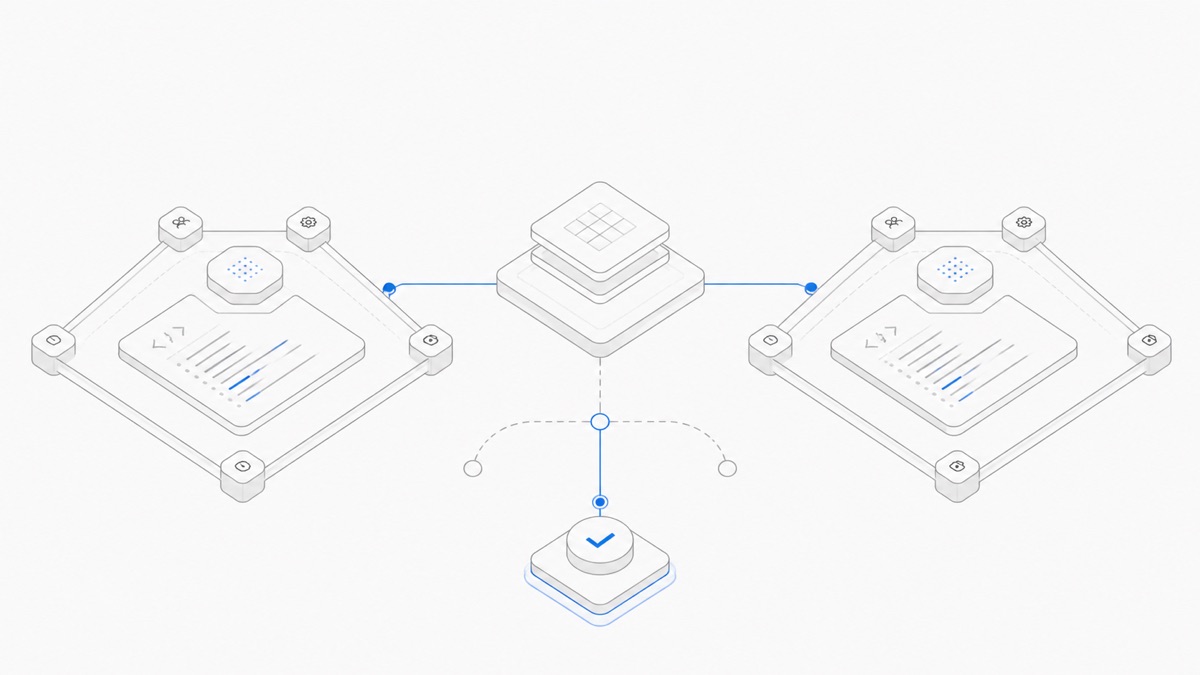
Choose Codex or Claude Code by the execution surface, access and billing path, permissions, compatible model, and task. Existing OpenAI or Anthropic access can make one product easier to adopt, but it does not establish which harness will produce the better patch on your repository. If code quality is the deciding factor, compare both from isolated copies of the same starting state.
If your actual decision is between an autonomous coding agent and an AI-first code editor, use the separate Codex vs Cursor comparison; that question has a different product boundary.
Codex vs Claude Code: the short decision
The practical choice depends on what you are actually optimizing.
This table is a starting rule, not a performance ranking. Existing provider access is one decision factor alongside task fit, permissions, surface, recovery behavior, and cost.
First, compare the right four layers
A fair Codex vs Claude Code comparison separates four variables.
1. Agent harness workflow
The agent harness is the execution layer. It organizes the loop in which the system reads context, proposes or performs actions, uses tools, observes results, and continues toward an outcome.
Codex and Claude Code are agent products and harnesses. They are not simply the names of individual models. The harness shapes how a task is planned, how tools are exposed, how permissions are handled, how context is retained, and how the result is presented.
2. Model
The model supplies the underlying reasoning and generation capability. Model availability can vary by product, plan, configuration, and date.
This is a major source of bad comparisons. If one run uses a different model class, reasoning setting, or version, the result cannot be attributed only to “Codex” or “Claude Code.” A harness comparison should hold the model conditions as close as the products allow and document the remaining difference.
3. Product surface
A terminal session, an IDE integration, a desktop application, and a remote browser task create different workflows. They can differ in repository access, interruption behavior, permissions, visibility, and how a human reviews changes.
Comparing Codex in one surface with Claude Code in a very different surface may still be useful for your personal decision, but it is not a clean harness benchmark. Name the surfaces in the result.
4. Access and billing path
Subscription access and API-metered access are different commercial paths. They can expose different limits, account controls, and cost behavior.
Before asking which product is cheaper, establish whether each run uses a consumer or team subscription, an API key, additional credits, or another supported route. Otherwise, the price comparison has no stable denominator.
Current pricing and usage limits
Last verified: September 10, 2026. Recheck the linked official pages and the controls on the account that will pay before making a purchase or plan decision.
Editorial review: Agent.Space Editorial compared the official product and billing documentation cited below. This article does not report a first-party same-task benchmark.
The official pages support the plan names and billing paths below, but exact prices can vary by plan, billing period, region, and tax treatment. This article therefore compares how access is priced and limited rather than freezing a dollar figure that can go stale.
Official references: Codex pricing, Codex plan usage limits, paid Work and Codex resets, Claude plan choices, Claude usage credits, and Claude Code models, usage, and limits.
The detailed Codex pricing guide distinguishes purchased instant resets, banked resets, usage Credits, and API billing. The Claude Code pricing guide records the corresponding plan, Usage Credit, bundle, and API boundaries. Keep those vendor-specific details in their canonical pages rather than turning this comparison into two duplicated price sheets.
For a five-product purchasing matrix, use the separate AI coding Agent pricing comparison. It compares subscriptions, included allowances, and overage units; this page stays focused on the Codex-versus-Claude-Code workflow decision.
A useful operational metric is cost per accepted task, not cost per prompt. Treat that as a decision method, not as data reported by this article: record whether the patch met acceptance tests, how much human repair it required, and which official usage bucket was charged.
Where and how each harness runs
The two products have overlapping but not identical surfaces. This table records what the official documentation supports; it does not invent a winner where the exact surface or configuration controls the behavior.
Authentication, execution boundaries, and usage-check instructions in this section verified: September 10, 2026. This is not a same-task benchmark.
Before a CLI comparison, run codex login status and Claude Code's /status to confirm the active authentication. For direct Anthropic access, an approved ANTHROPIC_API_KEY takes precedence over subscription OAuth; in non-interactive -p mode, the key is used without that interactive approval. Owning a subscription does not prove the run is using it. Check the authentication precedence without copying credentials into your comparison report.
If AWS procurement or data controls are part of the choice, follow the separate Codex with Amazon Bedrock setup guide. That path changes the model provider, identity, feature set, quota, and bill, so it should not be compared with a ChatGPT-plan Codex run as if only the harness changed.
For usage evidence, Codex CLI's /status shows remaining plan limits; its usage documentation also points to the account dashboard. Claude Code's current /usage view distinguishes plan usage from the locally estimated session cost. That dollar estimate is not a Pro or Max subscription bill; use Claude Console for authoritative API billing. Record the meter's meaning alongside the number.
How to compare the workflows on a real engineering task
Without a controlled run, it would be misleading to say that Codex or Claude Code is better at planning, implementation, or review. You can still compare the workflows by defining what evidence to capture.
Use a bounded task with an objective finish line—for example, fix one reproduced bug without changing unrelated behavior. Then evaluate both runs through the same stages.
The accepted repository result is the outcome. A confident explanation, a fast completion time, or a low token estimate is not enough if the tests fail or the diff is unsuitable.
Which one fits your task?
Rather than assigning a single winner, use the task to decide what deserves the most weight.
If your shortlist extends beyond Claude Code, apply the same criteria to compare Codex alternatives by workflow rather than brand; the replacement still has to cover the surface, access path, permissions, and review process you actually need.
Small, well-specified bug fix
Prioritize reliable repository inspection, a minimal diff, and execution of the exact regression test. Either harness may fit. Use your existing access path for the first run, then compare if the result needs too much repair.
Large refactor
Prioritize plan quality, context management, staged verification, and the ability to resume or review a long task. Test a representative slice before committing the whole refactor to one workflow.
Code review
Prioritize independence from the implementation, precise references to changed behavior, and evidence from tests or repository rules. Using a different harness for review can be valuable because it reduces the chance of simply repeating the implementer’s framing, but independence is not a guarantee of correctness.
Parallel backlog work
Prioritize environment isolation, session visibility, repository coordination, and how completed work returns for human review. The relevant comparison may be the surrounding cloud or team workflow, not only the agent’s generated code.
If the alternative is a session-centered cloud delegation product rather than Claude Code, continue with the Codex vs Devin workflow comparison.
Product work by a less technical operator
Prioritize a surface that makes scope, previews, file changes, and verification understandable. Do not assume that a browser interface makes an engineering task safe by itself; the acceptance criteria still matter.
When using both is better than choosing one
A permanent either-or decision is not always necessary. Codex and Claude Code can occupy different roles in the same project workflow.
Implement with one, review with the other
Give the reviewer the original requirement, repository state, resulting diff, and acceptance tests. Ask it to find specific defects or missing verification—not merely to agree with the implementation summary.
Explore with one, validate with the other
One session can map an unfamiliar code path or propose alternatives. A second can challenge assumptions and evaluate the chosen plan against repository constraints before changes begin.
Use the same workspace for implementation followed by review
In one shared workspace, finish the implementation first. Save the original requirement, resulting diff, tests, and open risks, then start a separate review Session with the other harness. The reviewer can inspect the current saved project files and explicit handoff artifacts; it does not automatically inherit the implementer’s turns or unstated reasoning.
Do not use two Sessions modifying the same shared files as a supposedly controlled head-to-head test. Agent.Space does not imply private worktrees, automatic merge, or automatic isolation between Sessions. The human still owns coordination and acceptance.
Agent.Space publicly lists both Codex and Claude Code and separates the Agent choice from the compatible model choice. It is independent from OpenAI and Anthropic; this workflow does not imply endorsement, shared provider accounts, or identical native features.
A reproducible way to compare Codex and Claude Code yourself
If performance or code quality will decide the purchase, retain enough information to reproduce the result.
- Create identical isolated starting states. Use two independent repository copies or Workspaces from the same commit. If only one environment is available, restore that exact commit and clean state before the second run. Do not run both against one mutable shared tree.
- Define one task and stopping rule. Give both runs the same requirements, exclusions, acceptance test, repository rules, and intervention limit.
- Record material conditions. Note the model, product surface, access and billing path, permissions, tools, environment, lockfile, and date; disclose differences that cannot be aligned.
- Score the repository outcome. Compare correctness, diff scope, verification, human repair, elapsed time, and officially reported usage as separate measures.
- Repeat before generalizing. One task can guide that task; it cannot prove a permanent winner across repositories, models, or releases.
This protocol is deliberately stricter than a screenshot of two answers. It separates observed evidence from preference and makes future updates possible when a model, harness, plan, or surface changes.
The bottom line
The useful Codex vs Claude Code decision is not “Which brand is smarter?” It is “Which harness, model, surface, and access path produces an accepted result for this task with an operational workflow we can support?” If those layers are still blurred together, start with Agent harness vs model.
Start with the access path and interface that fit your organization’s task, permissions, and cost controls. If the result matters enough to compare, run the same bounded task from isolated copies of the same starting state. When independent review is more valuable than a head-to-head result, use one harness to implement and the other to review the saved diff and test evidence.
In Agent.Space, keep the project files in one shared Workspace and start a new Session for the second harness in a sequential implement-then-review workflow. The new Session can inspect saved files and an explicit handoff, but it does not inherit the first Session's chat context. For a controlled Codex-versus-Claude-Code comparison, use isolated Workspaces or reset to the same clean commit before each run.
Review the available Agents when you are ready to choose a harness for one bounded task, keep the starting state explicit, and inspect the resulting diff and test evidence.