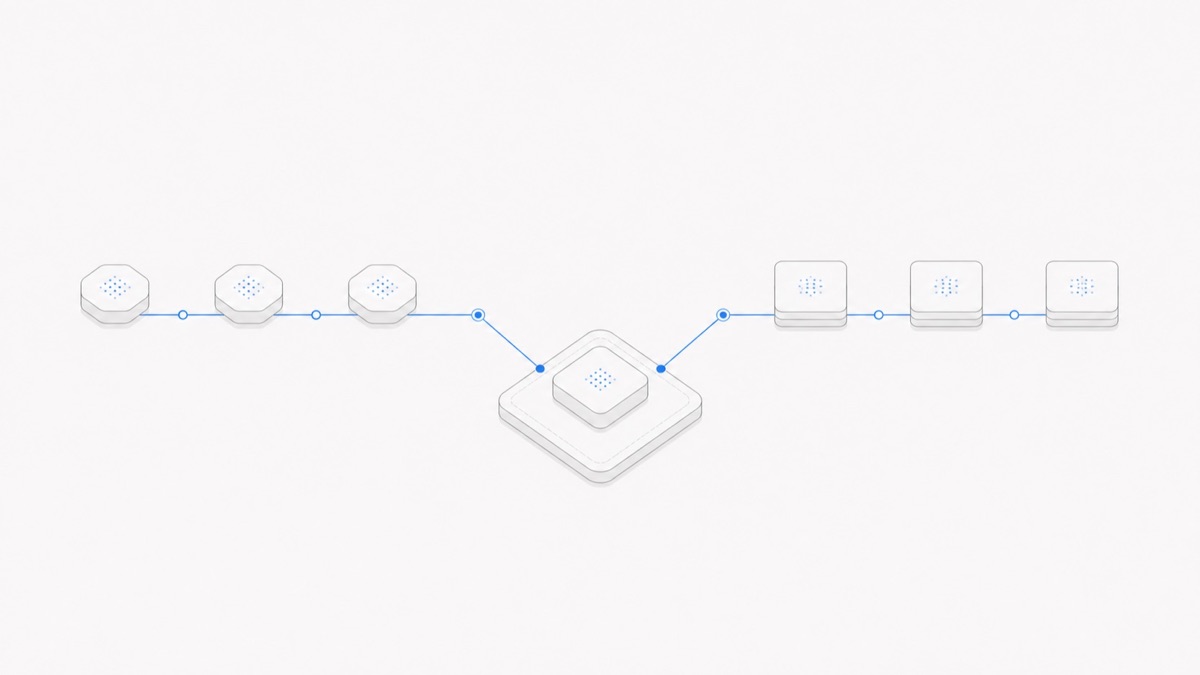
Claude Code and OpenCode can both run coding tasks, and OpenCode can connect to Claude models through supported provider routes. They are still different agent harnesses. Claude Code is Anthropic's first-party coding product; OpenCode is an MIT-licensed, multi-provider agent whose software, model access, and inference bill can come from different places.
This is a source-based product comparison, not a firsthand code-quality, speed, success-rate, or token-efficiency benchmark. Product surfaces, prices, provider claims, permission behavior, and data-path statements were checked against official documentation on September 4, 2026. Recheck the linked pages before choosing an account or production policy.
The short answer
There is no universal winner. Start with Claude Code when the first-party Claude experience is the requirement. Start with OpenCode when open-source inspectability and provider control are requirements. Even with the same named Claude model, the harness can change context, tools, permissions, prompts, and results.
Compare the harness before you compare the model
Four layers determine the workflow:
Our agent harness versus model guide covers this distinction in depth. For this comparison, the practical consequence is simple: “OpenCode using Claude” does not become Claude Code. OpenCode still assembles context and calls tools as OpenCode; the selected provider still owns its own account and usage contract.
Community benchmarks often compare several layers at once: a different model, provider route, system prompt, permission preset, repository state, and runtime. Such a result may describe that one setup, but it cannot isolate the harness.
Product ownership, surfaces, and setup
Anthropic's Claude Code overview describes an agentic coding tool that reads codebases, edits files, runs commands, and works across terminal, IDE, desktop, and browser surfaces. It also documents CLAUDE.md, skills, hooks, MCP, and subagent workflows under the Claude Code product.
OpenCode's official documentation describes an open-source AI coding agent available through a terminal, desktop app, and IDE extension. Its official repository uses the MIT License. Project instructions can live in AGENTS.md, while provider and model setup are explicit parts of configuration.
Open source gives you the right to inspect and modify the harness. It does not automatically make every provider, model, desktop build, or hosted runtime self-managed. First-party ownership reduces some integration choices, but it does not remove the need to review permissions, data terms, and runtime state.
Models, providers, and the Claude subscription boundary
OpenCode's provider documentation says it supports more than 75 providers through its provider system, along with local models and custom base URLs. That number is a high-change fact; the more important contract is that you choose and authenticate the route.
For each route, record:
- provider and exact model ID;
- authentication method and account owner;
- price, rate limit, and context/tool support;
- data handling and retention terms;
- fallback behavior, if any;
- who can change the endpoint or model.
Do not assume a Claude Pro or Max subscription can be moved into any third-party harness. OpenCode's provider documentation explicitly warns that third-party plugins using Claude Pro/Max models are prohibited by Anthropic, and says such plugins have not been bundled since OpenCode 1.3.0. Follow the supported provider/API route documented by the vendors; this guide does not recommend workarounds.
This boundary is easy to miss because a model name can look identical in two selectors. Authentication and entitlement—not the label—decide whether the route is supported. Our OpenCode models and providers guide explains how to verify the active provider instead of trusting a remembered default.
Pricing: software cost is not inference cost
As of September 4, 2026, Anthropic's pricing page lists Free at $0 without Claude Code, Pro at $20 monthly or $200 paid annually, and Max starting at $100 per month. Supported API use follows the applicable API pricing and account terms rather than the flat consumer-plan label.
OpenCode's core repository is MIT-licensed, so there is no license fee for using that software. The model still needs an inference route. Official OpenCode documentation presents several possible paths:
OpenCode “free” therefore describes the core software license, not universal free inference. OpenCode Go is optional, and Zen is not required to run the core product. A direct provider key can be cheaper or more expensive than another route depending on the model and workload; no honest fixed ranking exists without usage data.
Compare a full accepted task, not an isolated prompt. Include failed attempts, human review, setup time, and reruns. Do not turn a nominal request price or plan limit into an invented monthly task count.
Permissions, data paths, and team control
Both products document granular permission controls, but matching words do not imply matching defaults.
OpenCode's permission documentation defines allow, ask, and deny actions. Claude Code's permission documentation describes its own rule system. Compare the effective policy for file access, shell commands, network calls, external directories, and destructive actions in the exact runtime you will use.
OpenCode's enterprise documentation says OpenCode does not store code or context by default: processing happens locally or through direct requests to the selected provider. It identifies /share as an exception. That claim does not describe what the selected provider does with a request, so the provider's terms remain part of the data path.
Claude Code data handling also depends on account type and surface; use Anthropic's data-usage documentation for the applicable path. Avoid shortcuts such as “open source equals private” or “first party equals secure.” Verify:
- where the harness runs;
- where model requests go;
- whether sharing, telemetry, or storage is enabled;
- how credentials are stored and rotated;
- which policies are centrally enforced;
- which logs can support an audit.
OpenCode's enterprise options include central configuration, SSO, and internal gateway patterns. Claude Code has its own team and enterprise controls. Evaluate the exact purchased tier and deployment, not a generic product label.
Instructions, agents, and workflow portability
Switching harnesses costs more than changing a command. A repository can contain assumptions about instruction files, skills, hooks, subagents, MCP servers, permission syntax, provider names, and artifact locations.
Keep universal repository facts—build commands, architecture boundaries, acceptance checks, prohibited files—separate from product-specific automation. Then a migration becomes translation rather than rediscovery.
If you want a hosted OpenCode environment after choosing the harness, the OpenCode cloud workspace guide covers the runtime layer. For the corresponding Claude path, see Claude Code on Agent.Space.
A fair same-model test
To learn whether the harness matters for your work, control the other layers:
- Start from the same clean commit and duplicate workspace.
- Use the same exact model ID and supported provider route where possible.
- Give both harnesses the same repository facts and task prompt.
- Align tool permissions, network access, secrets, and time budget.
- Require the same commands, tests, and artifacts.
- Record human interventions, rejected approaches, provider cost, elapsed time, and final diff.
- Have a reviewer score the result without treating patch size as success.
If the exact model or provider cannot be aligned, call the exercise a workflow comparison, not a same-model harness test. That can still be useful, but the conclusion should match the evidence.
Use a task with an observable outcome: a test passes, a bug reproduces and stops reproducing, or a build produces a named artifact. “It felt smarter” is not a durable acceptance criterion.
Which one should you choose?
Choose Claude Code if first-party Claude behavior, Anthropic-supported surfaces, and Claude Code-native project configuration are more valuable than provider portability.
Choose OpenCode if MIT-licensed inspectability, multiple providers, local/custom endpoints, and control over the model route are hard requirements—and you are prepared to operate those choices.
Choose neither based only on the cheapest headline price. Confirm the full route from account and model to runtime and accepted result. Also estimate migration cost: a flexible provider layer has value only if the team can keep configuration and evaluations disciplined.
Agent.Space supports Claude Code and OpenCode as separate harness choices. If you want to compare currently available combinations in a persistent workspace, open the live Agent.Space selector and use one repository starting point, task, and acceptance check. Model availability and billing remain separate; Agent.Space is not Anthropic or the OpenCode project.
FAQ
Is OpenCode free?
The core OpenCode software is MIT-licensed. Model inference, provider accounts, hosted compute, OpenCode Go, or Zen can still cost money. “Open-source core” is not the same as “free models.”
Can I use my Claude Pro or Max subscription in OpenCode?
Do not assume that entitlement is portable. OpenCode's provider documentation warns that third-party plugins using Claude Pro/Max models are prohibited by Anthropic. Use a route explicitly supported by the relevant official documentation.
Is OpenCode the same as Claude Code when both use Claude?
No. They remain different harnesses with different context assembly, tool implementations, permission systems, configuration, session state, and runtime options.
Does open source make OpenCode more private?
It makes the harness inspectable. Privacy still depends on the runtime, selected provider, telemetry and sharing settings, credential handling, and organizational controls. OpenCode identifies /share as an exception to its default no-storage statement.
Can I compare Claude Code and OpenCode in Agent.Space?
Agent.Space supports both harnesses, subject to the combinations shown in the live selector. Use the same project starting point and an observable acceptance test; do not assume model availability, provider identity, accounts, or usage allowances are shared.