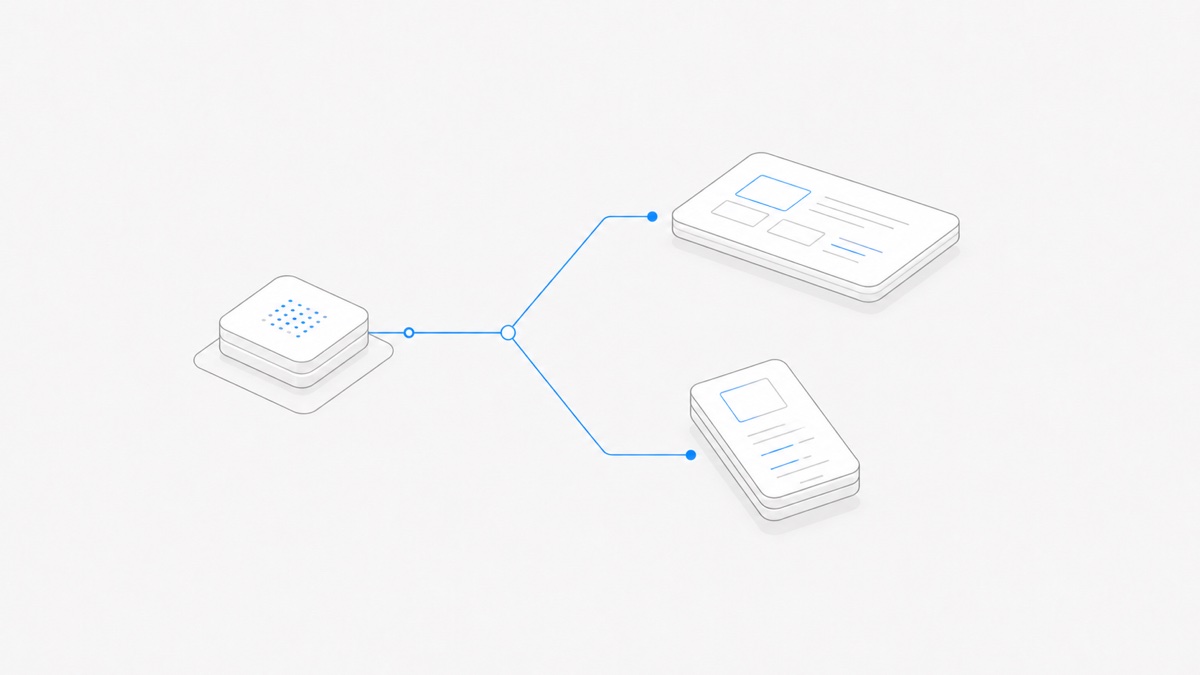
Grok Build is now available inside Grok on the web, iOS, and Android. You can describe an app, game, website, or dashboard, iterate on the result in chat, and publish it to a link. The August 19, 2026 SpaceXAI announcement also added a clearer path from a quick build to code you can continue elsewhere.
That makes Grok Build useful for fast, shareable prototypes. It does not remove the need to review source ownership, access controls, secrets, dependencies, and the maintenance path before treating a generated app as a lasting product.
Before evaluating this release, see what Grok Build means across its open-source terminal harness and web/mobile builder, because those surfaces share a name but do not expose the same workflow.
What changed in the August 2026 release
The release expanded Grok Build from an Early Beta limited to SuperGrok Heavy to every Grok plan. SpaceXAI says the same describe-and-build workflow is available on the web, iOS, and Android.
The announced release includes:
- live app building from a Grok conversation;
- publishing to a project-specific
grok.meaddress; - access choices for only you, anyone with the link, or the public internet;
- custom domains and generated link-preview covers;
- inline sharing on X;
- Remix, so another person can fork a published app;
- export to GitHub for continued work outside Grok Build;
- Secrets for keeping third-party API keys outside the app's code;
- Connectors for bringing external data into an app.
Grok Build can also enable SpaceXAI APIs for an individual app. The announcement says this access can cover Grok chat, image, and voice capabilities without asking the builder to create and paste an API key. Access is scoped per app and can be revoked.
These are product-surface capabilities, not a statement that every Grok model, API, and coding harness behaves the same way. The distinction between an Agent harness and a model still matters when you compare Grok Build with a repository-focused coding Agent.
The workflow from prompt to published app
A practical Grok Build workflow has four stages.
- Describe the outcome. State what the app should do, who it is for, and the important interactions. “Build a dashboard” is weaker than a description that names the data, filters, decisions, and empty states.
- Review behavior in chat. Exercise the main path, invalid inputs, mobile layout, and any action that writes data. A working demo is evidence that one path works, not evidence that every edge case is covered.
- Choose the publishing boundary. Decide whether the app should remain private, use link access, or be public. Confirm the generated cover and domain before sharing it broadly.
- Decide how the project continues. Keep iterating in Grok Build, allow Remix, or export to GitHub and move into an editor or terminal workflow.
That final decision is important. A published link is a distribution mechanism; GitHub export is a source-code handoff. If a team needs review gates, releases, or a repeatable deployment process, use the preview, publish, and export checklist to separate those concerns.
What the built-in APIs, Secrets, and Connectors change
Per-app SpaceXAI API access removes one credential-handling step for supported capabilities inside a Grok Build app. Secrets provide a separate place for third-party keys instead of embedding them in client-visible code. Connectors can make a dashboard useful with real business data rather than sample values.
Those conveniences do not make every integration safe by default. Before connecting production data or an action with side effects, answer four questions:
- Which service receives the data?
- Where does the code run, and what can a browser user inspect?
- What can each credential read, change, or spend?
- How can access be revoked without rebuilding the entire app?
Apply the same least-privilege standard you would use in any coding Agent workspace security review. Keep test and production credentials separate, avoid broad tokens, and verify that a revoked credential actually stops the relevant path.
When Grok Build is a good fit—and when it is not
Based on the announced workflow, Grok Build is a strong candidate when the immediate job is to turn an idea into something interactive and shareable:
- a prototype for user feedback;
- a small game or interactive demo;
- a visual dashboard with a defined data source;
- a campaign or event experience with a short feedback loop;
- an internal proof of concept before a larger engineering commitment.
Consider a repository-first engineering workflow earlier when the project requires complex tests, multiple deployment environments, strict dependency review, a long release history, or ownership by several engineering teams. GitHub export creates a bridge, but an exported repository still needs build instructions, dependency checks, secrets management, review, deployment, and an accountable maintainer.
This is an evaluation framework, not a claim that a Grok Build project cannot grow. The point is to decide where the durable system of record should live before users and integrations depend on it.
A pre-publish checklist
Before sharing a Grok Build app beyond its builders, verify:
- the owner and intended audience are explicit;
- the
grok.meaccess level matches that audience; - a custom domain, if used, points to the correct project;
- no private value appears in source code, logs, or generated content;
- each SpaceXAI API permission and third-party Secret has a named purpose;
- connectors expose only the data the app needs;
- the primary path and obvious failure paths work on web and mobile;
- the team knows whether Grok Build or an exported repository is the source of truth;
- someone owns updates, revocation, and incident response after publication.
Grok Build's web and mobile release lowers the barrier between an idea and a live link. The responsible next step is to match that speed with a clear access, source, and maintenance boundary. To compare the current coding Agent surfaces available through Agent.Space, review the Agents catalog before choosing the workflow that should own the project long term.